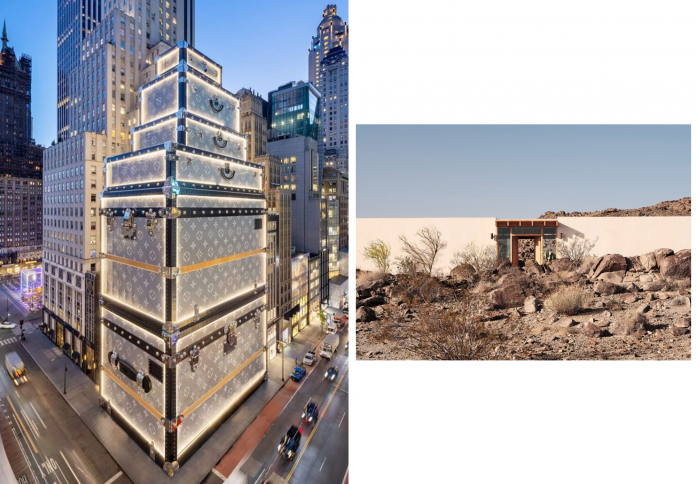
From the vertical canyons of Manhattan to the sun-baked landscapes of the Southwest, the American architectural scene in 2025 has been defined by a daring mix of supertall ambition and intimate, ecological sensitivity. As Dezeen concludes its annual review, the standout projects of the year reveal a nation grappling with its industrial heritage while pivoting toward a more sustainable, tech-integrated future. Whether it is a “dystopian citadel” rising above Park Avenue or a windowless sanctuary in Austin, the top ten US projects of 2025 prove that American design is at its most potent when it challenges the status quo. These are the buildings that moved the needle, redefining how we work, live, and interact with the built environment in 2026.
The Supertall Sentinel: 270 Park Avenue
The most significant addition to the New York skyline in decades, 270 Park Avenue officially opened its doors in 2025 as the global headquarters for JPMorgan Chase. Designed by the British studio Foster + Partners, the 1,388-foot-tall (423-meter) supertall has been described by critics as a “beacon for New York’s continued financial prowess.” Its most striking feature is its “fan-column” base, which lifts the massive volume of the building off the street to create a vast, open-air public plaza at its feet.
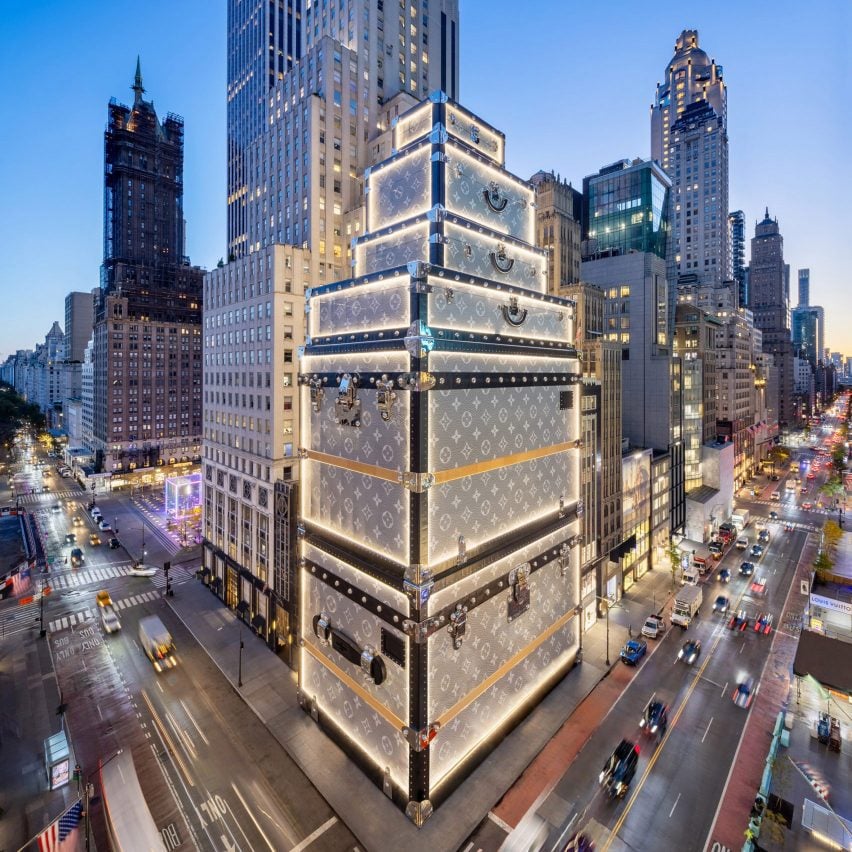
Beyond its height, the tower is a pioneer in sustainable urbanism, claiming the title of New York City’s largest all-electric skyscraper. Powered entirely by a hydroelectric plant in upstate New York, the building integrates advanced water-cycling systems and triple-glazed facades. Inside, the design prioritizes “biophilic” workspaces, using natural light and indoor greenery to soften the industrial scale of what many have called a “modern dystopian citadel.”
Educational Cantilevers: Robert Day Sciences Center
In California, BIG (Bjarke Ingels Group) completed its first major project in the state: the Robert Day Sciences Center at Claremont McKenna College. The building is a radical departure from traditional academic architecture, featuring a series of stacked, concrete volumes that cantilever out over one another. These dramatic overhangs are supported by distinctive steel V-trusses, which have been pushed to the very edges of the floor plans to create column-free interior spaces.

The design is intended to foster “cross-disciplinary” collaboration, with laboratories, classrooms, and social spaces all visible to one another through a central, light-filled atrium. By integrating outdoor terraces on every level, the project encourages students to move between the climate-controlled labs and the rugged Californian landscape. It is a building that feels both “heavy and weightless,” embodying the experimental spirit of the sciences it houses.
The Privacy Paradox: Specht Architects’ Austin ADU
At the opposite end of the scale from the Park Avenue supertall sits a modest yet profound Accessory Dwelling Unit (ADU) in Austin, Texas. Designed by Scott Specht for his own family, the residence is encased in a weathered Corten-steel shell and notably features no outward-facing windows. This radical design choice was made to provide total privacy within a dense suburban context, creating a fortress-like exterior that belies a soft, luminous interior.

The house is organized around two internal courtyards that draw natural light deep into every room. By turning the architecture “inward,” Specht has created a sanctuary that feels completely removed from the noise of the street. In a year defined by the “work-from-home” evolution, this Austin home has become a prototype for how high-density living can remain intimate and serene, proving that transparency is not the only way to achieve light.
Airport Elegance: Portland International Terminal
The infrastructure highlight of 2025 was the massive main terminal expansion at Portland International Airport (PDX). Designed by ZGF Architects, the project replaced the traditional “sterile” airport aesthetic with a breathtaking nine-acre mass-timber roof. The undulating wooden structure was sourced entirely from local forests, including wood from small tribal-owned lands, making it a masterpiece of regional sustainability and craftsmanship.

The design aims to bring the “feeling of the Pacific Northwest forest” indoors, with skylights that mimic the dappled light of a canopy and real trees planted throughout the terminal. By prioritizing natural materials and a low-carbon footprint, the PDX expansion has set a new global benchmark for “human-centric” infrastructure. It is a space that manages to make the stress of modern travel feel, if only for a moment, like a walk in the woods.
Austin’s Rising Tide: Sixth and Guadalupe
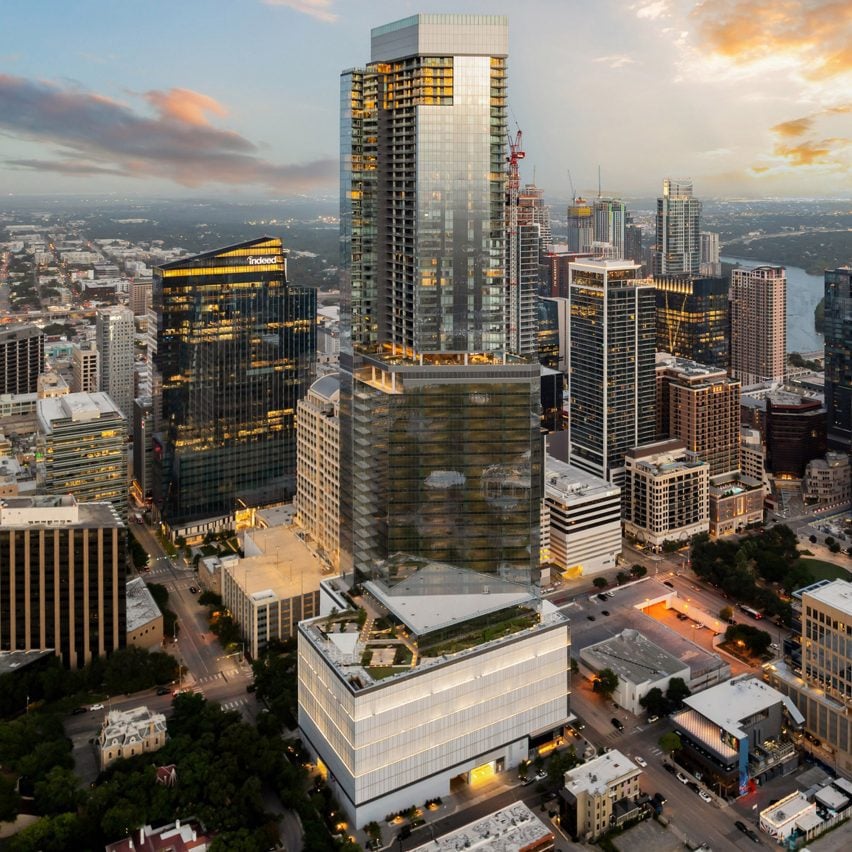
Texas continued its vertical boom in 2025 with the completion of Sixth and Guadalupe by Gensler. This “trapezoidal” skyscraper held the title of Austin’s tallest building for a brief window before the city’s skyline was further transformed by KPF’s Waterline supertall. The building is a mixed-use powerhouse, combining luxury residences with “class-A” office space and extensive outdoor terraces that overlook the Colorado River.

The tower’s unique geometry is a response to the city’s “Capitol View Corridors,” which protect views of the Texas State Capitol. This constraint resulted in a sculptural, multifaceted form that shifts in appearance depending on the angle of the sun. In 2026, Sixth and Guadalupe serves as a symbol of Austin’s rapid transformation into a global tech hub, reflecting the “high-density, high-design” philosophy that is currently sweeping through America’s Sun Belt.
The Legacy of 2025: A New American Vernacular
Looking back at the US architecture of 2025, it is clear that the “mass-timber” movement and “all-electric” skyscrapers are no longer experimental outliers—they are the new standard. Architects are moving away from the generic glass boxes of the early 2000s in favor of materials that tell a story, whether it is the locally sourced wood of Portland or the weathered steel of Austin.
As these ten projects demonstrate, the best American architecture in 2026 is that which finds the balance between the global and the local. We are seeing a return to “monumental” forms that are grounded in ecological reality. From the heights of New York to the quiet courtyards of the South, the US has reclaimed its position as a laboratory for architectural innovation, building a future that is as resilient as it is beautiful.