More than 150 years ago, a single designer revolutionized the fashion world by transforming dressmaking into an art form and elevating the couturier to celebrity status. As the first to put his name to his creations, Charles Frederick Worth changed not only how clothes were made but how fashion itself was perceived. A new exhibition at the Petit Palais in Paris, Worth: Inventing Haute Couture, celebrates his pioneering legacy and the origins of modern luxury fashion.
The rise of the first fashion superstar
In the mid-19th century, fashion was a largely anonymous trade. Dressmakers fulfilled the desires of aristocratic women, tailoring garments to their precise instructions. But Charles Frederick Worth, an Englishman who made Paris his creative playground, reversed this dynamic. Instead of taking orders, he gave them. Clients came to him not with designs, but to discover what he had imagined for them.
Worth began his career in London before relocating to Paris, where he worked his way up from a textile salesman to a partner at Maison Gagelin. In 1858, alongside Swedish financier Otto Bobergh, he launched his own label — the House of Worth — and in doing so, pioneered the modern concept of the designer as the central creative force in fashion. This move laid the groundwork for what we now call haute couture.
“Women come to see me to ask for my ideas, not to follow theirs,” Worth once declared — a quote that encapsulates his revolutionary approach. At his atelier at 7 Rue de La Paix, he presented clients with pre-designed models, which they could customize with trimmings or modular adjustments. It was an unprecedented blend of artistry and business acumen. And it worked: his clientele soon included the most powerful women of his time, including Empress Eugénie of France.
Dressing the elite of two continents
During the Second French Empire, Worth’s designs were a staple at the lavish costume balls of Parisian high society. His gowns, sometimes inspired by history or fantasy, often rivaled the artwork of the day in complexity and imagination. Notable examples — such as a gown modeled after a portrait of Spanish royalty or an umbrella costume resembling a collapsed parasol — are featured in the current exhibition.
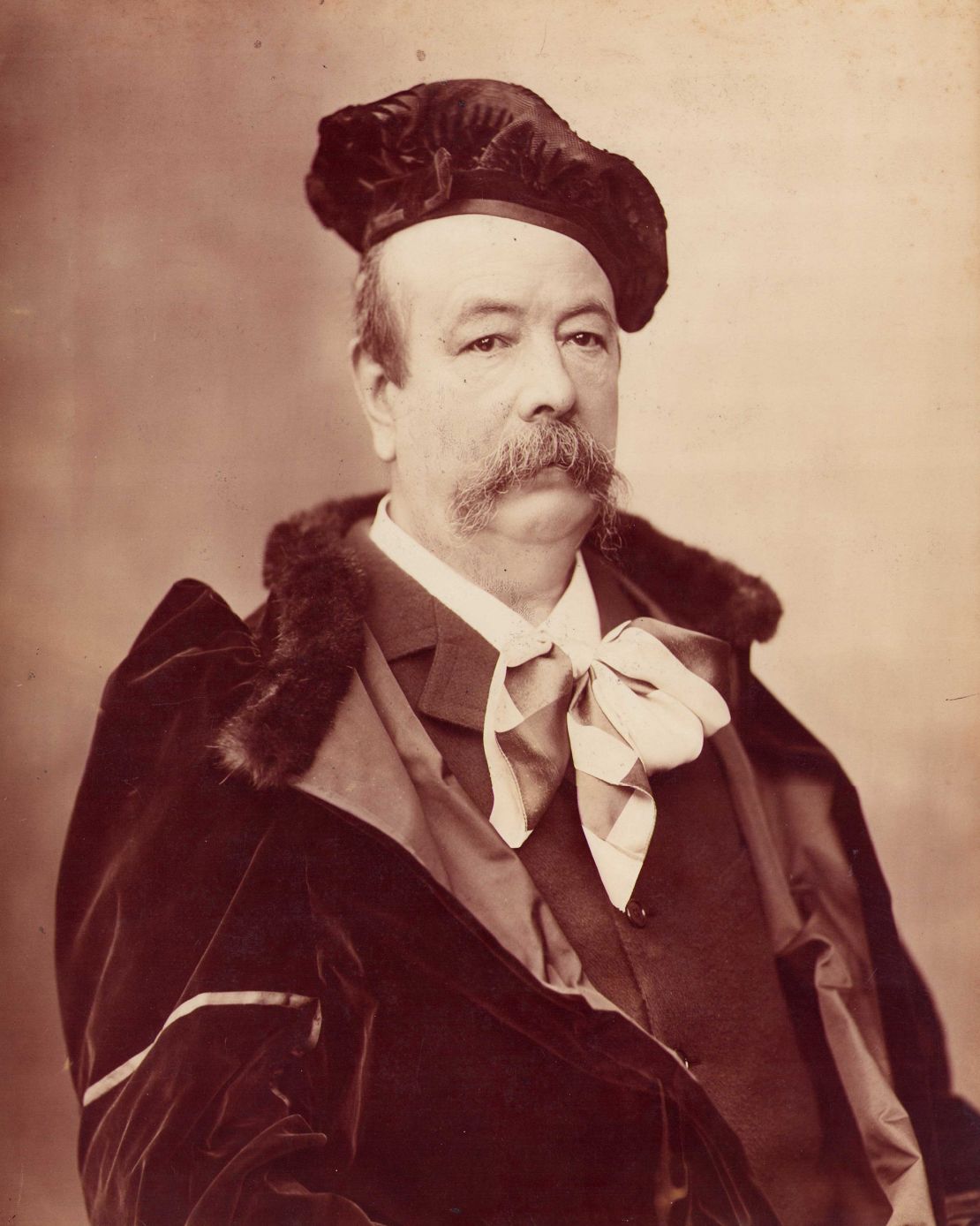
Worth’s atelier ballooned to over 1,000 workers by the 1870s, a reflection of both demand and the increasing complexity of couture production. His fame reached far beyond Europe, attracting clients from Egypt, Japan, India, and especially the United States, where Gilded Age families like the Astors and Vanderbilts treated his clothes as status symbols.
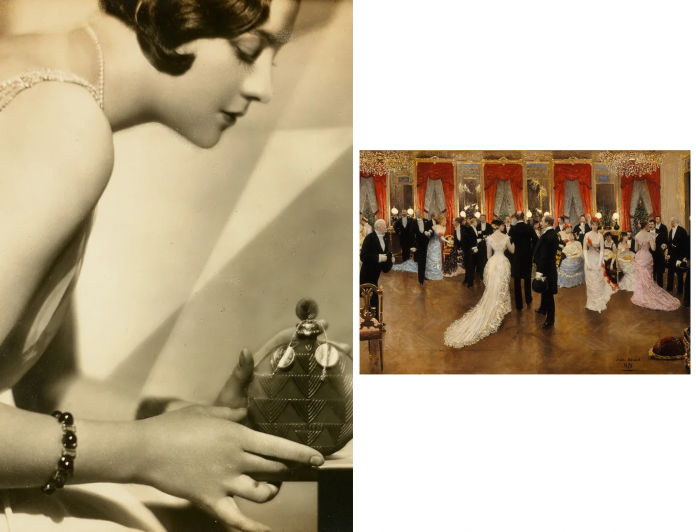
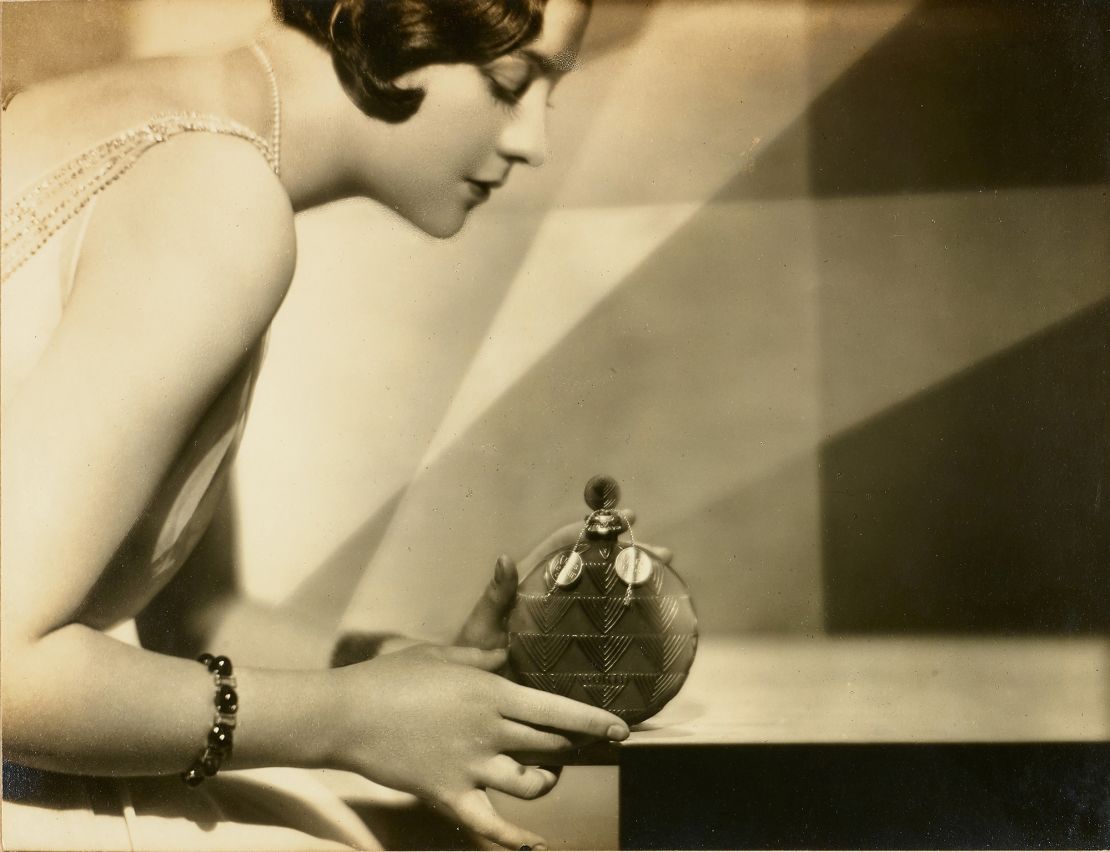
The exhibition at the Petit Palais brings these stories to life through a striking display of gowns, accessories, and rare personal artifacts, such as perfume bottles designed by René Lalique and a black lacquer screen by Jean Dunand. Also on display are archival photographs and even scent recreations — like the soft floral “Je Reviens,” originally launched in the 1930s and revived for the show.
Reinventing the fashion industry
Worth didn’t just transform how clothes looked — he restructured the entire fashion business. Before him, there were no runway shows, no designer names sewn into labels, and no concept of seasonal collections. Worth introduced live modeling (using his wife Marie as his first model), photographed his designs, and assigned each piece a name or number. These practices laid the foundation for the fashion industry’s infrastructure as we know it. To combat the growing issue of copycat designs — particularly as American tariffs made exporting his garments prohibitively expensive — Worth founded the Chambre Syndicale de la Haute Couture in 1868. This institution, now part of the Fédération de la Haute Couture et de la Mode, was created to protect French couture from imitation and reinforce Paris’s reputation as the global fashion capital.
The exhibition also emphasizes how Worth’s influence extended into the decorative arts and luxury trades, with Louis Vuitton trunks designed specifically for transporting his delicate creations and family ties with Cartier. His attention to detail and mastery of brand presentation arguably foreshadowed the modern luxury ecosystem.
Legacy in fabric and fiction
When Otto Bobergh left the firm in the 1870s, Worth carried on the business with the help of his wife and, later, his sons Gaston and Jean-Philippe. As political regimes and fashion tastes shifted — from the crinolines of the 1860s to the bustled silhouettes of the 1880s — Worth adapted his designs, toning down the flamboyance while maintaining creative authority. He passed away in 1895, but his house endured well into the 20th century.
Worth’s cultural legacy is enduring. French author Émile Zola based a character on him in La Curée, depicting him as “the genius tailor before whom the Second Empire’s rulers took to their knees.” Marcel Proust’s Duchess of Guermantes, inspired by Countess Élisabeth Greffulhe — a prominent Worth client — continues to captivate readers over a century later.
The exhibition at the Petit Palais is a rare opportunity to witness the world Worth helped build — a world where clothing became aspiration, and the designer became artist. Due to the fragility of the garments, the exhibition will not travel, making it a must-see for those in Paris before it closes on September 7.
Charles Frederick Worth didn’t just invent haute couture.
He created a new language of fashion — one spoken across continents, and echoed in every runway show, red carpet, and designer label today. Through vision, confidence, and radical innovation, he stitched his name into history — quite literally.