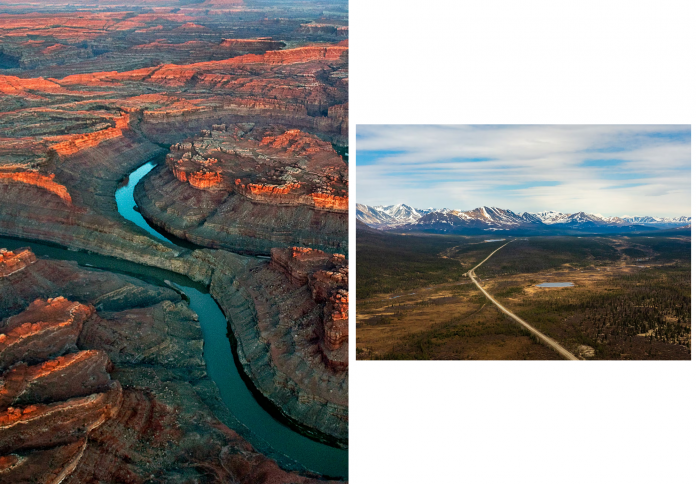
In the heart of south-central Utah, where the Colorado and Green rivers have spent eons carving through ancient sandstone, lies Canyonlands National Park—a sprawling testament to the raw, sculptural power of nature. Covering more than 330,000 acres, it is Utah’s largest and most topographically complex national park, yet it remains remarkably wild. While neighboring Arches National Park draws crowds with its elegant spans, Canyonlands offers something more visceral: a “fantastic, complex, and impassible gulf” of rock and silence, as famously described by author Edward Abbey. With approximately 86 percent of its landscape designated as wilderness, this is a realm where the modern world feels like a distant memory, replaced by unbroken scarps, towering sandstone pillars, and a silence so profound it becomes a presence in itself.
A Triad of Deserts: The Islands, The Needles, and The Maze
Canyonlands is uniquely divided into four distinct districts by the rivers that define it, each offering a vastly different encounter with the high desert. The most accessible is “Island in the Sky,” a massive level mesa that sits 1,000 feet above the surrounding terrain. This district serves as a natural observation deck, offering sweeping vistas that stretch to the horizon in every direction. For first-time visitors, it provides the most immediate sense of the park’s scale, with overlooks like Grand View Point revealing the intricate “veins” of the canyons etched into the earth far below.

In contrast, “The Needles” district, located in the southeast corner, is a playground of color and geometry. It is named for the cedar-mesa sandstone spires—rust-hued and white-banded—that dominate the skyline. Here, the experience is more intimate; rather than looking down from above, travelers move through a forest of stone. The third major section, “The Maze,” is perhaps the most remote and challenging territory in the lower 48 states. It is a jigsaw puzzle of deep canyons and standing rocks that demands self-reliance and expert navigation, attracting those who seek absolute solitude and a true off-the-grid experience.
Chasing the Light: Sunrises, Sunsets, and Red Rock Vistas
Light is the true protagonist in Canyonlands, transforming the monochrome desert into a kaleidoscope of gold, ochre, and violet. For photographers and early risers, Mesa Arch is the quintessential pilgrimage site. At dawn, the rising sun illuminates the underside of the arch, creating a glowing orange frame for the vast canyon system beyond. It is a fleeting, magical moment that perfectly captures the ethereal beauty of the Utah desert. As the day progresses, the shifting shadows reveal the depth and texture of the “fins” and “hoodoos” that populate the landscape.

When the sun begins its descent, the Green River Overlook becomes the premier theater for the evening’s performance. The vista looks west across the “Stillwater Canyon,” where the river reflects the fading light against a backdrop of darkening mesas. Grand View Point, at the southern tip of the Island in the Sky, offers a 200-degree panorama that fills the eye with a seemingly infinite landscape. These viewpoints are more than just photo opportunities; they are places to sit in quiet contemplation, absorbing the “panorama of light and space” that has remained virtually unchanged for millennia.
Ancestral Echoes and Archaeological Mysteries
Beyond its geological splendor, Canyonlands is a rich repository of human history, holding some of the most significant rock art and archaeological sites in North America. The park was home to the Ancestral Puebloan people for centuries, and their presence is still palpable in the ruins and petroglyphs scattered throughout the canyons. In The Needles district, the “Roadside Ruin” offers an accessible glimpse into a 700-year-old cliff dwelling, while more adventurous trekkers can seek out hidden granaries tucked into the canyon walls.

The most profound expression of this ancient heritage is found in the Horseshoe Canyon Unit, home to the Great Gallery. This world-renowned site features life-sized, ghost-like figures painted on the canyon walls—some dating back thousands of years. These “barrier canyon style” pictographs are haunting and intricate, standing as silent sentinels of a culture that thrived in this harsh environment long before European exploration. Visiting these sites is a humbling experience, bridging the gap between the geological time of the canyons and the human time of those who once found sanctuary within them.
Adventure on the Edge: Rivers, Reefs, and 4WD Trails
For the restless soul, Canyonlands is an arena for high-octane exploration. The rivers that created the park—the Green and the Colorado—offer some of the most exhilarating whitewater rafting in the West. The Confluence, where the two rivers merge, marks the beginning of Cataract Canyon, a legendary stretch of water featuring Class IV rapids that test the mettle of even the most experienced rafters. From the river’s perspective, the canyon walls rise like skyscrapers, providing a sense of immersion that is impossible to achieve from the mesa tops.
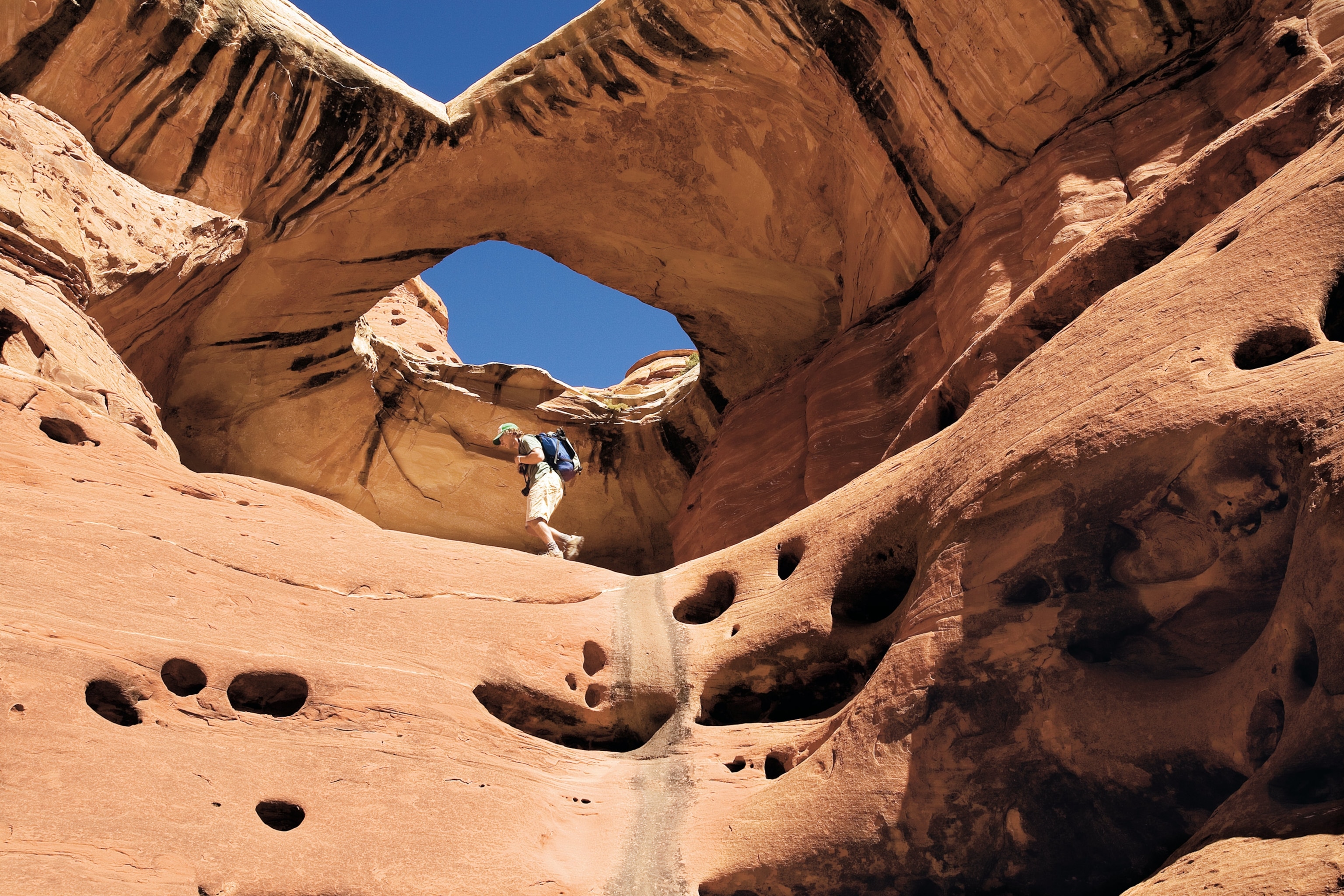
On land, the park’s rugged topography is navigated via a network of challenging four-wheel-drive roads. The White Rim Road is an epic 100-mile loop that winds around the Island in the Sky mesa, offering a multi-day journey through the heart of the park’s mid-level “rim.” Similarly, Elephant Hill in The Needles is widely considered one of the most technical 4WD routes in the National Park system, featuring steep grades and tight switchbacks. Whether by water or by wheel, these adventures allow visitors to engage with the park’s “brutal and almost inaccessible” terrain in a way that is both visceral and deeply rewarding.