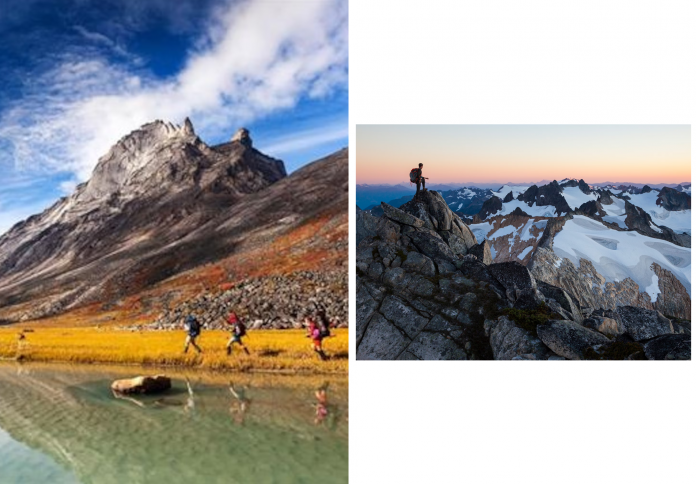
Deep within the rugged northwestern corner of Washington State lies a landscape so jagged and ice-scarred that it has earned the moniker “The American Alps.” North Cascades National Park is a cathedral of granite and ice, home to over 300 glaciers—the largest concentration in the United States outside of Alaska. Unlike the manicured vistas of more accessible parks, the North Cascades offers a raw, unfiltered encounter with the sublime. Here, turquoise lakes fed by glacial flour sit in the shadows of formidable peaks, and ancient evergreen forests cloak valleys that remain among the wildest territories in North America. For those seeking to escape the digital hum of the modern world, this vertical wilderness provides a profound sanctuary where the only soundtrack is the thunder of distant waterfalls and the whistling of the mountain wind.
A Fortress of Ice and Granite
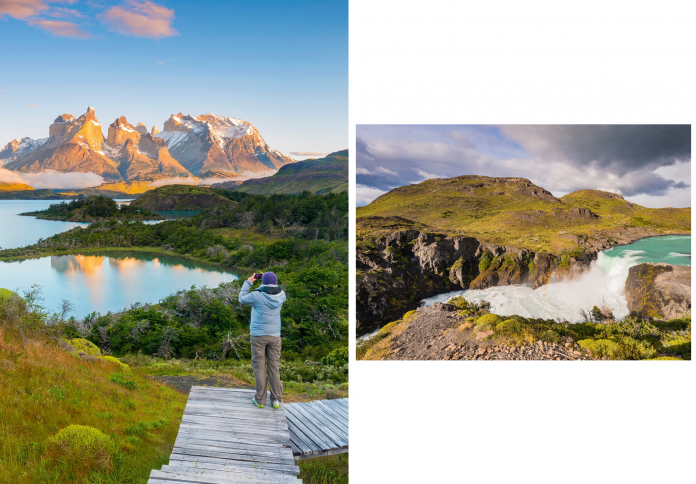
Established in 1968, North Cascades National Park is part of a vast, 684,000-acre complex that remains one of the least visited gems in the National Park system. This relative obscurity is its greatest asset; over 94 percent of the park is designated as protected wilderness, ensuring that the touch of humanity remains light. The park’s geological identity is defined by its extreme topography, where elevation gains of several thousand feet occur over short horizontal distances. This creates a dramatic verticality that challenges even the most seasoned mountaineers and rewards them with views of the Picket Range—a series of spires so sharp they appear to pierce the very fabric of the sky.

The presence of the glaciers is not merely aesthetic; they are the lifeblood of the region’s ecosystem. As these massive bodies of ice slowly grind against the bedrock, they produce a fine sediment known as “rock flour.” When this sediment suspended in meltwater reaches alpine catchments like Diablo Lake, it scatters light in a way that produces an otherworldly, milky turquoise hue. This visual phenomenon serves as a constant reminder of the park’s status as a living, breathing cryosphere, where the forces of the last Ice Age are still actively carving the earth.
Traversing the North Cascades Highway
The primary artery through this frozen kingdom is State Route 20, the North Cascades Highway. Often cited as one of the most scenic drives in the nation, the road follows the path of the Skagit River, climbing from near sea level to over 5,000 feet at Washington Pass. The journey along this highway is a masterclass in ecological transition, moving from the lush, rain-drenched forests of the west to the drier, golden landscapes of the east. Along the way, overlooks such as Ross Lake provide panoramic stages for the park’s grandeur, allowing travelers to witness the intersection of deep blue waters and snow-capped summits without ever leaving the pavement.

However, the highway is a seasonal privilege. Due to the staggering amount of snowfall—often exceeding 400 inches in a single winter—the road is typically closed from late autumn until late spring. When the gates finally open in May or June, it signals a spectacular awakening. As the snow recedes, subalpine meadows explode into a riot of color with lupine, heather, and Indian paintbrush, creating a brief but brilliant window for visitors to explore the high country. This ephemeral beauty makes timing a visit to the North Cascades an essential part of the experience.
High-Altitude Treks and Wild Encounters
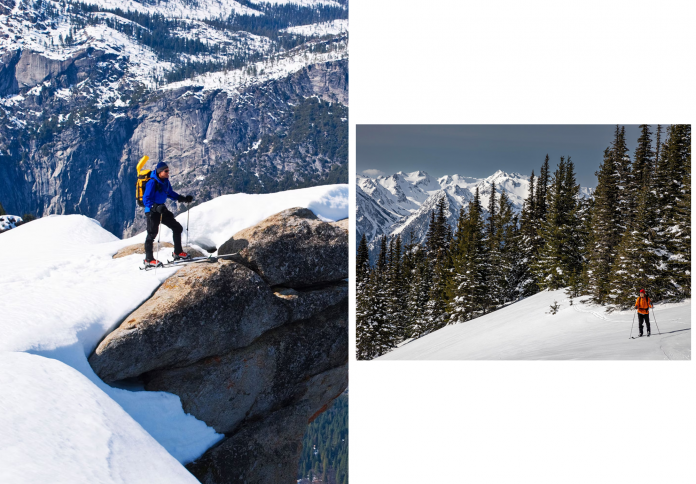
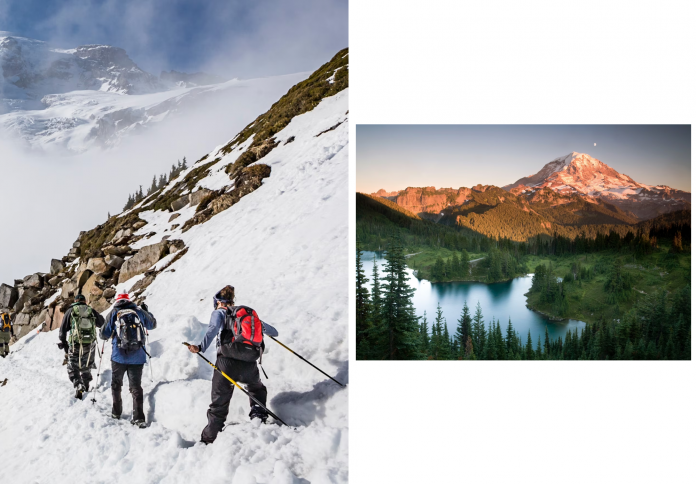
For the adventurous, the true essence of the park is found only by leaving the asphalt behind. A network of nearly 400 miles of trails leads hikers through diverse microclimates, from lowland cedar groves to high-alpine tundra. The Cascade Pass Trail is perhaps the park’s most iconic route, tracing a historic path used by Native Americans for centuries. The steady climb through switchbacks eventually gives way to a saddle that offers 360-degree views of the Stehekin Valley and the Sahale Glacier. It is a place where the scale of nature feels appropriately humbling, and the air carries the crisp, clean scent of melting snow.

This wilderness is also a stronghold for North American megafauna. The park’s remote interior provides a habitat for elusive species such as the gray wolf, wolverine, and grizzly bear. While these predators are rarely seen, more common residents like mountain goats and hoary marmots are frequently spotted by alert hikers in the subalpine zones. In the autumn, the Skagit River becomes a theater for one of nature’s great spectacles: the salmon run. As thousands of fish return to their natal streams to spawn, they draw in a massive concentration of bald eagles, creating one of the largest wintering populations of the birds in the lower 48 states.
The Art of Wilderness Immersion
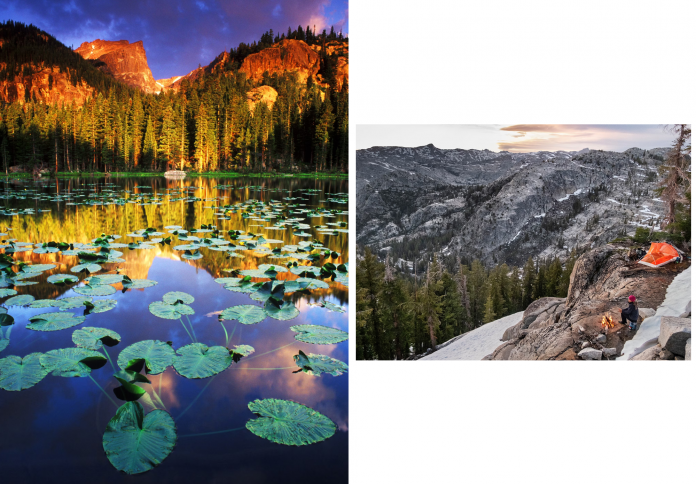
Staying in North Cascades National Park requires a commitment to the “Leave No Trace” philosophy. Because there are no grand lodges within the park’s core, the experience is centered on backcountry camping and rustic campgrounds along the Skagit River. For those who venture into the interior, a wilderness permit is a golden ticket to solitude. Waking up in a high-mountain basin, surrounded by silence and the first light of dawn hitting a glacier, is a transformative experience that few other places can offer. It is a form of travel that prioritizes presence over consumption, demanding physical effort in exchange for spiritual clarity.

For travelers who prefer a roof over their heads, the surrounding communities of Winthrop and Marblemount offer gateway hospitality. Winthrop, with its Western-themed storefronts, provides a charming contrast to the rugged peaks, while Marblemount serves as the final outpost for supplies and information. Regardless of where one lays their head, the magnetism of the North Cascades remains constant. It is a destination that does not cater to the casual tourist but instead beckons to the explorer, offering a rare glimpse into a world where ice and stone still reign supreme.