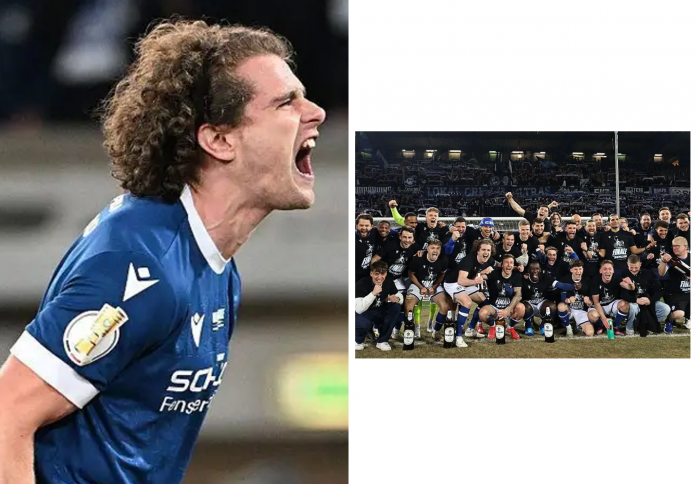
After decades in footballing obscurity—and at the center of an infamous internet conspiracy—Arminia Bielefeld have burst into the German spotlight. With a fairy-tale run that has taken them from the third division to the brink of silverware, a Europa League spot, and national reverence, this is more than just a cup story. It’s a cultural moment that’s rewriting the city’s identity.
The club that wasn’t supposed to exist
For years, the city of Bielefeld has been a punchline. According to the long-running “Bielefeld Conspiracy,” the city doesn’t exist at all. The theory—born on the early internet and later embraced by satirists, politicians, and influencers—claims that no one’s ever been to Bielefeld, no one knows anyone from there, and therefore it must be a fabrication.
But after this football season, there’s no denying Bielefeld is very, very real. Arminia Bielefeld, the city’s football club, have captivated Germany by doing the impossible: defeating four Bundesliga clubs to reach their first-ever DFB-Pokal final. On May 24, they’ll face VfB Stuttgart at Berlin’s Olympiastadion, with history, glory, and perhaps even European football on the line.
A season nobody saw coming
Even the most faithful of Arminia supporters would never have predicted this. Just a year ago, the club was on the brink of collapse after back-to-back relegations from the Bundesliga to the 3. Liga. They finished barely above the relegation zone last season, and expectations were low heading into this one.
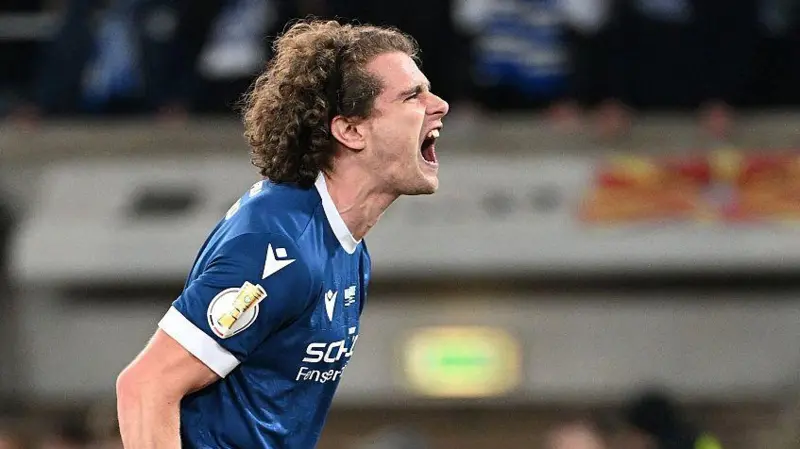
Sporting director Michael Mutzel, appointed during this period of instability, led a summer overhaul that brought in 13 new players. Head coach Michel Kniat, a young manager with no experience above the third tier, was tasked with molding a squad from scratch. The league campaign started slowly—Arminia didn’t find their form until February—but something clicked in the cup.
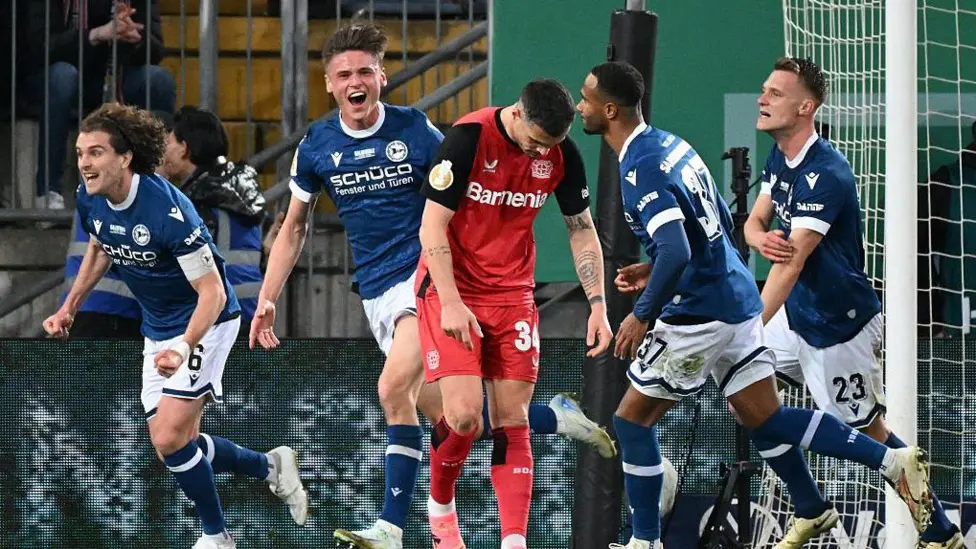
A 2–0 win over second-division Hannover 96 in the first round set the tone. Then came giants: Union Berlin, Freiburg, Werder Bremen, and finally, reigning league and cup champions Bayer Leverkusen. Each fell to the underdogs at Arminia’s raucous Schüco Arena. “When the game ended and I realized we’d beaten them, I felt like I was about to break down, I was so happy,” said Ulrich Zwetz, a club commentator who’s followed Arminia since 1994. “This is the most special ‘up’ I’ve experienced. It’s emotional, unbelievable.”
The night the champions fell
That semi-final against Leverkusen wasn’t just an upset—it was a masterpiece. Arminia fell behind early but stayed composed. Marius Wörl equalized with a curling strike before Maximilian Großer gave them the lead. The second half was a nervy affair, with Leverkusen hitting the post and dominating possession, but Arminia’s defense—bolstered by the brilliance of goalkeeper Jonas Kersken—held firm.
As the final whistle blew, thousands stormed the pitch. Captain Mael Corboz described the night in surreal terms: “One player brought his five-month-old baby to the nightclub because he couldn’t find a sitter. I forgot to eat and got drunk too fast. We ended the night at the stadium. It was perfect.” Eva-Lotta Bohle, a lifelong fan, recalled hugging strangers and crying in the terraces: “This can’t be real, I kept thinking. But it was. We were going to Berlin.”
From near-extinction to near-immortality
Arminia’s turbulent history is woven into the fabric of the club. Since their founding in 1905, they’ve experienced eight promotions to—and eight relegations from—the Bundesliga. Just 15 years ago, financial collapse loomed. Today, they are the first third-division team in history to eliminate four Bundesliga clubs in one Pokal campaign.
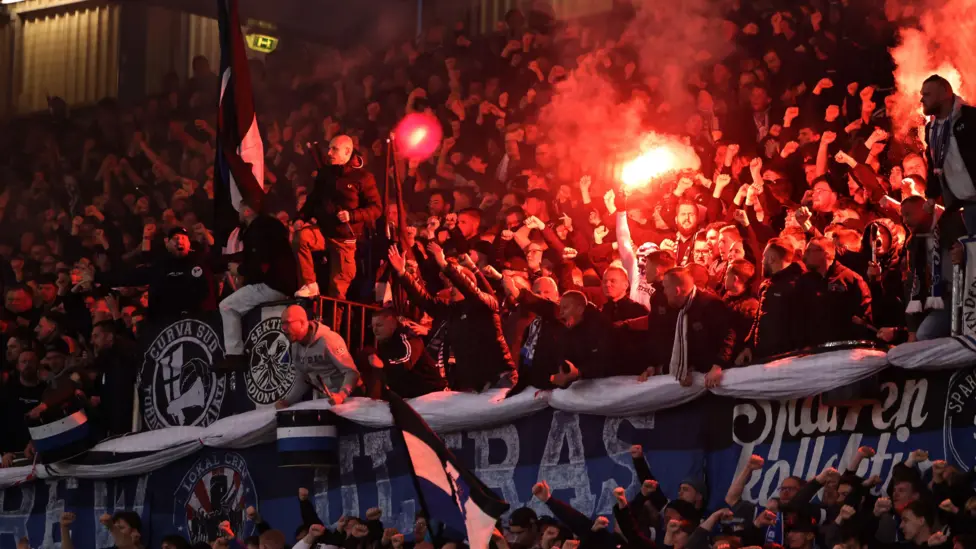
Their rise is underpinned not only by clever recruitment and tactical acumen, but a spirit of unity. “Football is so much in the head,” said Corboz. “Against bigger teams, you push past your limits. Every cup game felt like a final.”
Coach Kniat’s belief was infectious. “Before each game, he convinced us we could win. That confidence, that mindset—it changed everything,” said Mutzel. Even German football legend Bastian Schweinsteiger remarked after the Leverkusen match, “I didn’t see a two-league difference between the teams. Honestly, I didn’t even see one.”
Europa dreams and real riches
Should Arminia pull off one more miracle in Berlin, the consequences would be massive. A win would bring them not just the Pokal trophy, but a spot in the UEFA Europa League—and a financial windfall of nearly £20 million, including matchday revenue, prize money, and broadcast rights. That figure is almost unimaginable for a third-tier club. “It’s life-changing,” said Mutzel. “But right now, my focus is on keeping this group together. Everyone in Germany has seen what these players can do.”
Corboz, who grew up in the U.S. as a fan of French club Lyon, can hardly believe what’s happening. “To play in Europe, to face the clubs I grew up watching… it would be the pinnacle of my career.”
A city reborn
Bielefeld is living its biggest cultural and sporting moment in memory. Home shirts have completely sold out, giant public viewing screens are being set up across the city, and more than 20,000 ticketless fans are expected to travel to Berlin regardless—some even cycling or walking to raise money for charity. “This is the highlight of my career,” said Zwetz. “We have a one-in-a-lifetime chance to win the cup, secure financial stability, and enter European football. Whatever happens, this season has already changed everything.”
The final is more than just a match; it’s the realization of a dream Arminia fans have sung about for generations. A popular chant has echoed through terraces for decades: “One day, the DSC will play in the final. The final in Berlin. Generations have died without seeing this day. If we die, our children will sing this song. And one day, they will witness victory.”
Across Bielefeld, the graffiti says it all: “One day is now.”