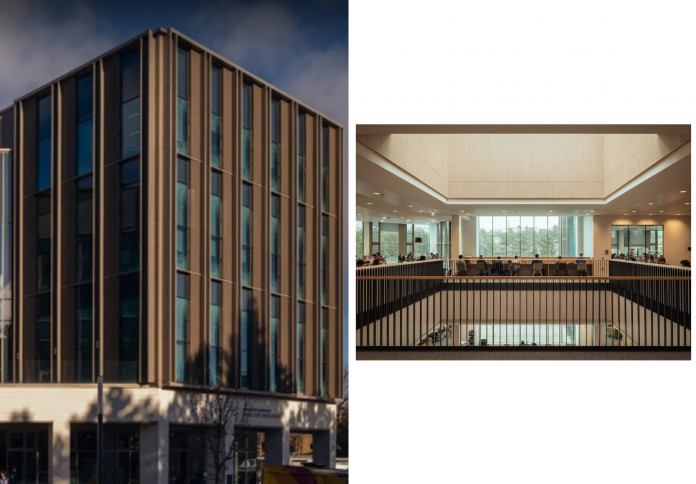
Sheppard Robson’s ambitious masterplan for a major new campus at the University of Edinburgh represents a significant step forward in the design of modern academic and research environments. The project is conceived not merely as a collection of buildings, but as a holistic, integrated environment that aims to foster collaboration, interdisciplinary research, and sustainability. Characterized by its flexible, human-centric design and a commitment to creating highly permeable public spaces, the campus is set to become a vibrant nexus for both the academic community and the wider city of Edinburgh. By emphasizing green spaces, low-carbon construction, and adaptable architecture, the design sets a new benchmark for future-proofed university development in the post-pandemic era.
Masterplanning for Interdisciplinary Collaboration
The core philosophy guiding Sheppard Robson’s design is the deliberate creation of an environment that physically and visually breaks down the traditional silos between academic departments.

The masterplan emphasizes interconnected buildings and shared facilities, designed to draw researchers and students from different fields into accidental, productive encounters. The strategic placement of communal atria, open laboratories, and collaborative workspaces aims to foster a culture of interdisciplinary research, which is increasingly vital for addressing complex global challenges. This approach moves beyond simply co-locating departments; it actively uses architectural form to generate knowledge transfer and cross-pollination of ideas, making collaboration the default mode of operation for the entire campus.
Sustainability and Low-Carbon Construction
In line with the university’s commitment to climate action, the campus masterplan places a strong emphasis on achieving high levels of environmental performance and utilizing low-carbon construction methodologies.
The design incorporates features focused on reducing the buildings’ operational carbon footprint, including optimized building envelopes for energy efficiency, extensive use of natural ventilation and daylighting, and the potential integration of renewable energy technologies. Furthermore, the architects have specified the use of sustainable and locally sourced materials wherever feasible, aiming to significantly reduce the embodied carbon associated with construction. This comprehensive approach to sustainability ensures the new campus acts as an exemplar of responsible, ecological development within the educational sector.
Creating a Permeable and Public-Facing Campus
A key feature distinguishing this project is its deliberate effort to make the new campus feel open and accessible, actively engaging with the public realm rather than acting as an insular academic fortress.
The masterplan prioritizes extensive public realm improvements, including landscaped green spaces, open pedestrian avenues, and new cycling routes. These spaces are designed to be easily navigable and inviting for both students and members of the surrounding community. By creating a highly permeable campus edge, the design facilitates interaction between the university and the city, encouraging public access to certain amenities, cultural spaces, and even ground-floor research exhibits. This strategy strengthens the university’s civic role and ensures the development contributes positively to the urban fabric of Edinburgh.
Flexible Design for Future Adaptability
Recognizing the rapid pace of change in both technology and pedagogical methods, the architectural design incorporates a high degree of flexibility and future-proofing to ensure longevity and relevance.
The internal layouts of the laboratory and teaching buildings are based on a modular grid system, allowing spaces to be easily reconfigured, expanded, or repurposed without major structural interventions. This adaptability is crucial for accommodating evolving research needs and shifts in teaching styles over the coming decades, preventing the buildings from becoming obsolete prematurely. By investing in resilient, flexible architecture, Sheppard Robson has created a framework that can absorb technological advancements and unforeseen changes, ensuring the campus remains a state-of-the-art facility long into the future.